Project Management
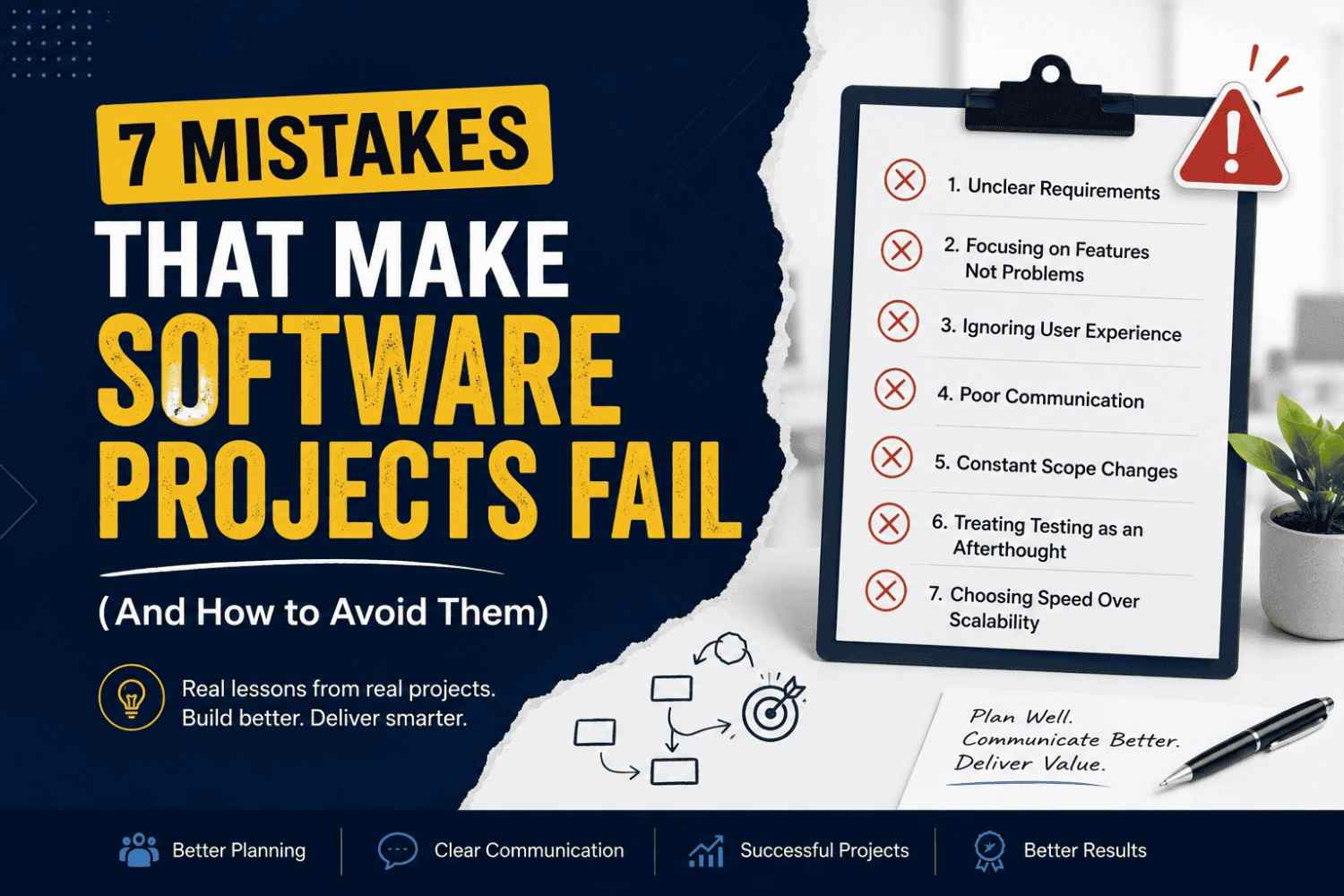
7 Mistakes That Make Software Projects Fail (And How to Avoid Them)
Short Description: Most software projects don't fail because of bad code. They fail because of poor planning, unclear requirements, and communication gaps. Here are the seven most common mistakes I've seen and how businesses can avoid them.
7 Mistakes That Make Software Projects Fail (And How to Avoid Them)
When people think about failed software projects, they usually blame technology, developers, or bugs.
In reality, most software projects fail long before a single line of code is written.
After working with businesses, startups, and software teams, I've noticed a pattern: the same mistakes appear again and again.
Here are seven common reasons software projects fail and what you can do to avoid them.
1. Starting Without Clear Requirements
One of the biggest mistakes businesses make is jumping directly into development.
They have an idea but no documented requirements.
Without clear requirements:
- Developers make assumptions.
- Features keep changing.
- Costs increase.
- Timelines slip.
Before development begins, create a clear project scope that defines:
- Goals
- Features
- User roles
- Business processes
- Success criteria
2. Focusing on Features Instead of Problems
Many projects start with a list of features.
Very few start with a clear understanding of the problem being solved.
Ask yourself:
"What business problem does this software solve?"
When the focus stays on solving problems rather than adding features, development becomes more effective and users get more value.
3. Ignoring User Experience
A powerful system with a poor user experience often fails.
Users don't care how complex the backend is.
They care about:
- Simplicity
- Speed
- Ease of use
Good software should require minimal training.
4. Poor Communication Between Stakeholders
Communication gaps create confusion.
Common examples include:
- Business owners assuming developers understand requirements.
- Developers assuming business priorities.
- Teams working with outdated information.
Regular meetings, documentation, and feedback cycles help keep everyone aligned.
5. Constant Scope Changes
Every project evolves.
However, uncontrolled changes can quickly destroy timelines and budgets.
Before adding new features, evaluate:
- Business impact
- Development effort
- Priority level
Not every idea needs to be implemented immediately.
6. Treating Testing as an Afterthought
Many teams leave testing until the end.
This often leads to:
- Production issues
- User frustration
- Expensive fixes
Testing should happen throughout the project lifecycle.
Finding problems early is always cheaper than fixing them later.
7. Choosing Speed Over Scalability
Startups often want everything delivered as quickly as possible.
Speed is important, but ignoring scalability can create bigger problems later.
The goal should be:
Build quickly.
Build correctly.
Build for future growth.
A balanced approach usually produces the best long-term results.
What Successful Projects Do Differently
Successful software projects typically share a few common characteristics:
- Clear goals
- Strong communication
- Defined scope
- User-focused design
- Regular feedback
- Realistic expectations
Technology matters.
But planning, communication, and execution matter even more.
Final Thoughts
Software projects rarely fail because developers can't write code.
Most failures happen because businesses underestimate the importance of planning, communication, and decision-making.
The good news is that these mistakes are avoidable.
A well-planned project doesn't just save money and time—it creates better outcomes for everyone involved.
Before starting your next software project, take the time to define your goals, understand your users, and build a solid foundation.
The success of your project depends on it.

Ankiit Janggid
Technical consultant and developer focused on engineering guidance, APIs, AI, and scalable product delivery.
View profile